


Author: Victoria Burley
Halloween and Guy Fawkes – two uniquely British celebrations
27th October 26
This Saturday, people around the world go out trick or treating in their neighbourhoods dressed as ghosts, vampires, witches, zombies and the like.
And while Halloween is now primarily about costumes, cheap thrills and sweets, it has ancient and historic British roots that trace their origins back to the ancient Celtic festival of Samhain – when people celebrated the end of the harvest and the start of winter. The ghoulish connection has developed from this being thought to be when the boundary between the living and dead became blurred.
For over 2,000 years people have disguised themselves when they are out during the evening on 31 October – originally wearing animal skins, grotesque masks and painting their faces with ash from fires. This was so that wandering spirits would mistake them for fellow ghosts or otherworld creatures rather than human beings and allow them to pass unheeded.
Modern lit up pumpkin faces, or Jack-o’-Lanterns, were originally outlandish and frightening expressions carved from beets, mangelwurzels, potatoes, swedes and turnips. These were placed near doorsteps and windows on Samhain Eve to frighten away wandering evil spirits.
One much feared character was a deceitful and manipulative drunkard called Stingy Jack who eternally roams the Earth as a punishment for having tricked the Devil multiple times – and it is after him that these lights are named.
Today, however, these lights are a beacon for participation to show that the homeowner is ready to be tricked or provide treats.
This trick or treating also has its origins in two ancient British traditions: souling, where the poor went door-to-door offering prayers for the dead in exchange for soul cakes, and guising, where children wore costumes and masks and went from house to house, performing a small talent, song, joke, or poem in exchange for treats like fruit, nuts, coins, or sweets.
So, far from being an American import as it is often perceived, Halloween (All Hallows’ Eve) is as traditionally British as the event which follows five nights later when we celebrate Guy Fawkes Night.
King James I was so relieved to have survived the 1605 plot to blow up the Houses of Parliament that he declared 5 November a national day of thanksgiving – and this was officially made law the next year through an Act of Parliament.
The burning of an effigy of Guy Fawkes and firework displays have taken place ever since to symbolize the failure of the assassination attempt and celebrate the King’s miraculous escape.
At Finton House, curiosity is one of our key Learning Skills, and discovering the fascinating stories behind familiar traditions is a wonderful way to nurture it. As we enjoy the costumes, pumpkins, bonfires and fireworks this autumn, it’s worth remembering the extraordinary history behind these much-loved celebrations.
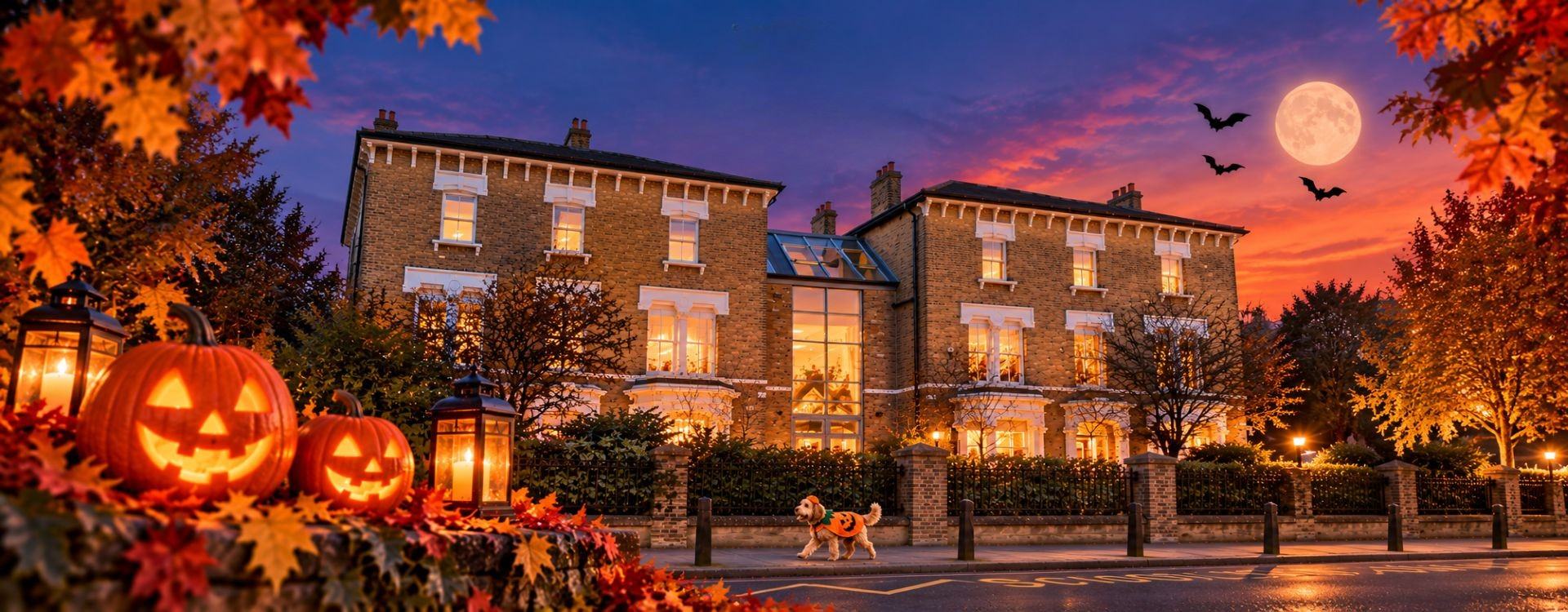
🪄 No spells were cast in the making of this image. Just a little AI magic! (Although Fin has requested that we make her pumpkin costume a reality.) 🐾🎃
Finton House Harvest Donations Support Local Families
13th October 26
Kindness is at the heart of life at Finton House School, and this year’s Harvest Festival provided a wonderful opportunity for our school community to put this important value into action.
Thanks to the generosity of Finton House families, pupils collected an impressive 490.8kg of food and essential supplies for Wandsworth Foodbank, helping to support local people experiencing hunger and hardship.
The donations, which were delivered to the foodbank with the help of our pupils, are estimated to provide the equivalent of 1,225 meals for people in need over the coming weeks.
Harvest Festival is a special occasion in the school calendar, encouraging children to reflect on the importance of gratitude, generosity and looking after others. It also provides a valuable opportunity to develop their understanding of the challenges faced by people in the wider community and the difference that even small acts of kindness can make.
As one of our five core school values, kindness is woven into everyday life at Finton House. By taking part in initiatives such as this, pupils experience first-hand the positive impact of working together to help others.
We are enormously grateful to all our families for their generous contributions and very proud of the children who helped collect and deliver the donations.
A wonderful example of the Finton House community coming together to make a meaningful difference.